
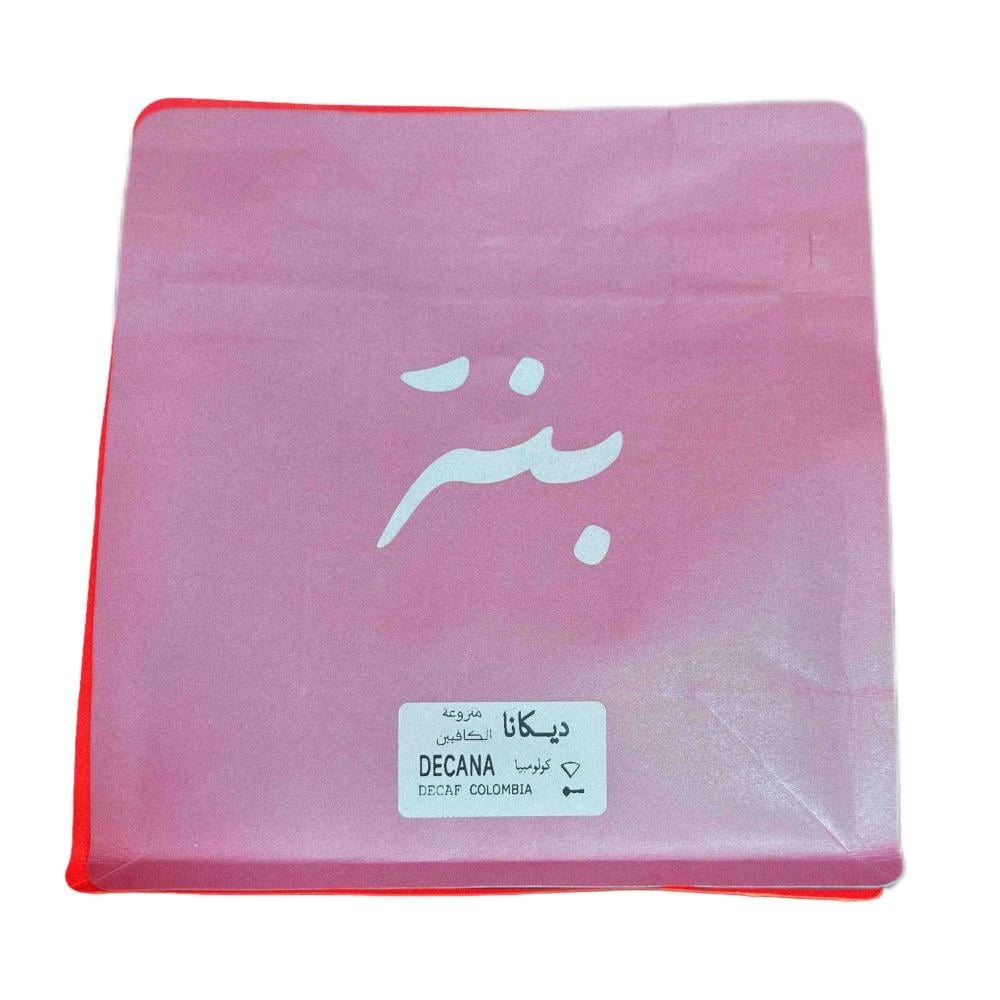


Huila Decaf
Origin: Colombia
Region: Huila
Altitude: 1300-1900 MASL
Process: sugarcane decaf process natural
Variety: Caturra, Tabi
Notes: Floral, Almond, Caramel
This coffee is taken 100% from
members of the Cade fi Huila
cooperative, which has 3,500 members
and operations in 28 municipalities in
the department of Huila. Our
cooperative brings together a significant
group of family small family owned
farms from The region.
The sugarcane decaf process natural,
eco-friendly method to extract the
caffeine.
Colombian Sugarcane Decaf Coffee
Can you enjoy coffee while reducing caffeine? Sugarcane decaf offers coffee lovers a way to keep the coffee ritual and flavor, with much less caffeine.
How is it processed?
The coffee is decaffeinated while still green, before roasting. The beans are moistened with water, then ethyl acetate (EA) is used to help extract the caffeine. In Colombia’s sugarcane process, the EA is derived from sugarcane. The beans are dried after processing and then prepared for roasting.
The method is closely associated with Colombia. Descafecol’s facility in Manizales opened in 1988. The processor says its process removes 99.9% of the caffeine, although the result may vary by coffee lot and processing.
How does it compare with other methods?
The sugarcane process uses water and sugarcane-derived EA. The water process, such as Swiss Water, uses water and carbon filtration without EA. The CO₂ process uses carbon dioxide under high pressure to extract caffeine.
Each method works differently, and none guarantees a better-tasting cup every time. The coffee’s quality, origin and roast also shape the result. “Sugarcane” describes the source of the EA; it does not mean sugar is added to the beans. And although the EA comes from a plant source, the process is not solvent-free: EA is the substance used to extract caffeine.
Is it healthy?
The main health-related difference is the lower caffeine content. Sugarcane decaf is not known to have a special health advantage over decaf made using other methods. Decaffeinated coffee is also not completely caffeine-free; a small amount may remain, depending on the coffee and how it is prepared.
Colombian coffee with its character, and much less caffeine.