
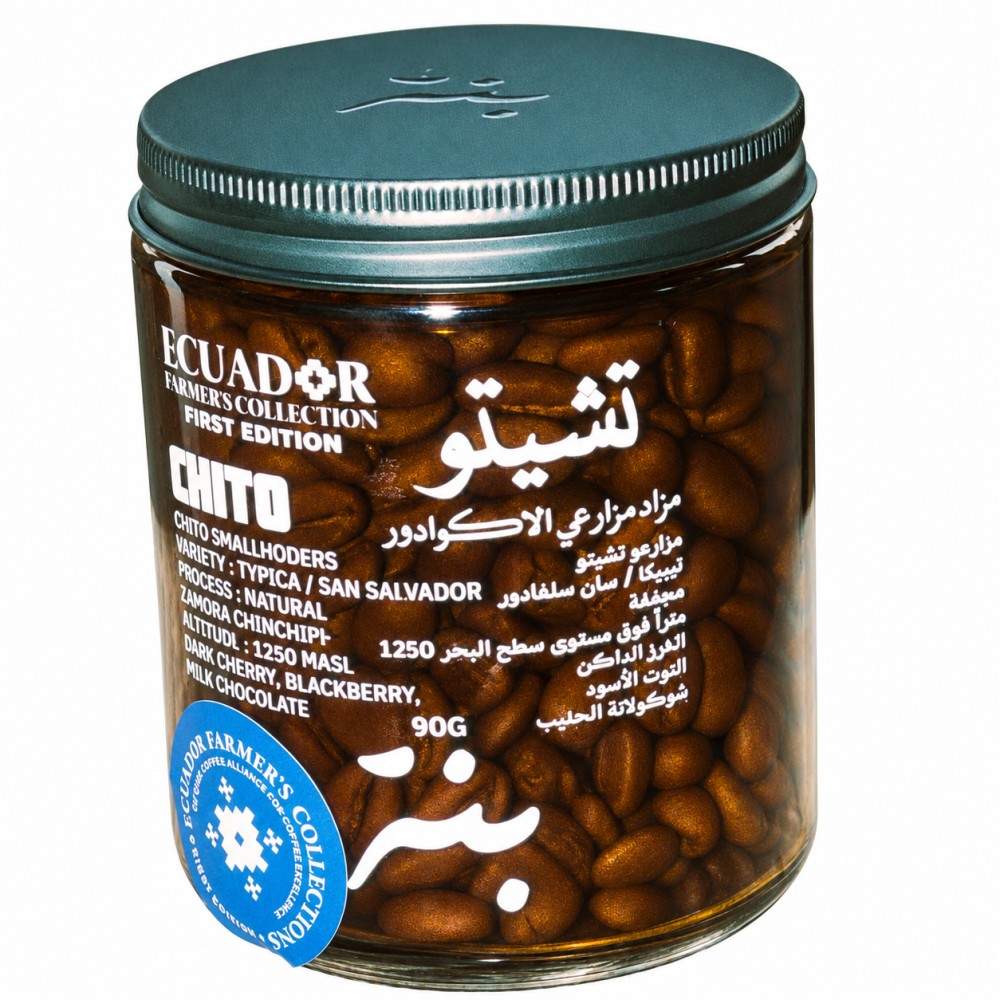
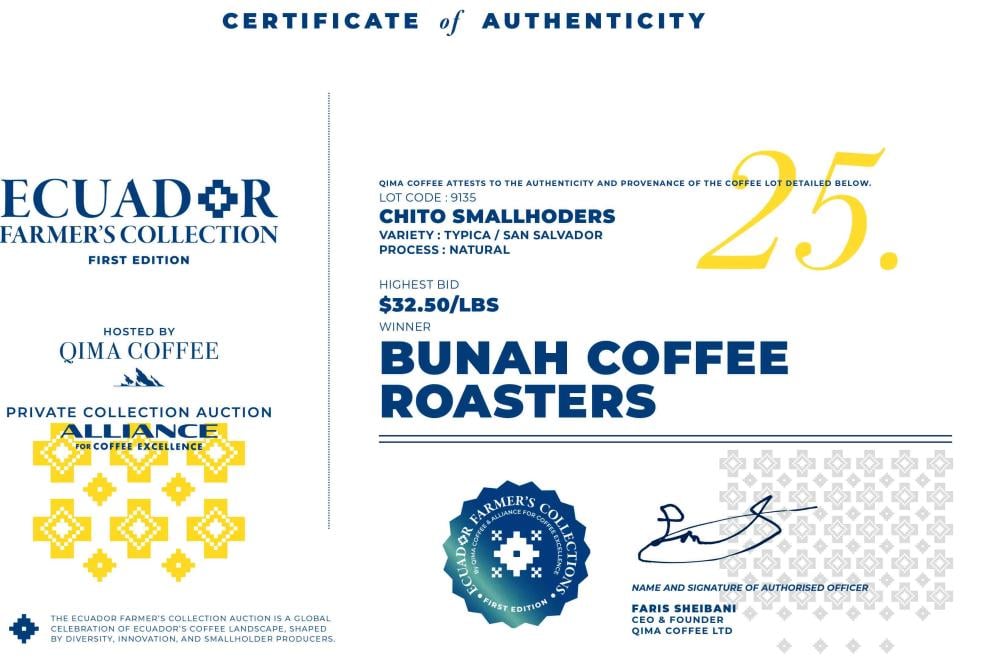
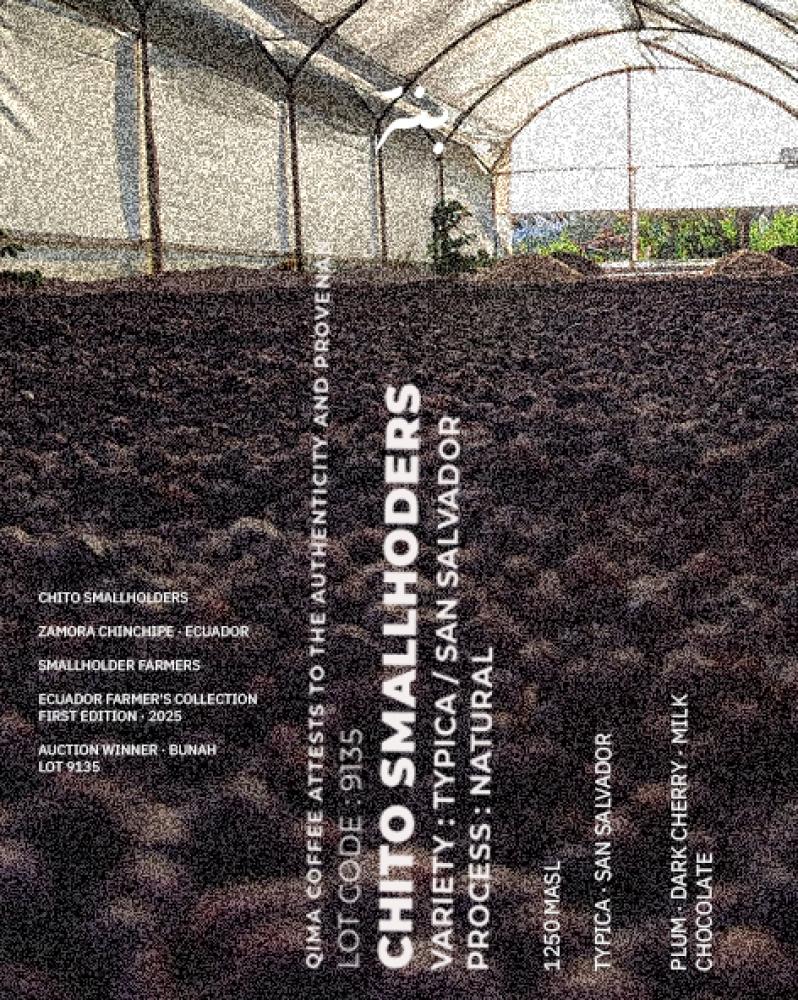
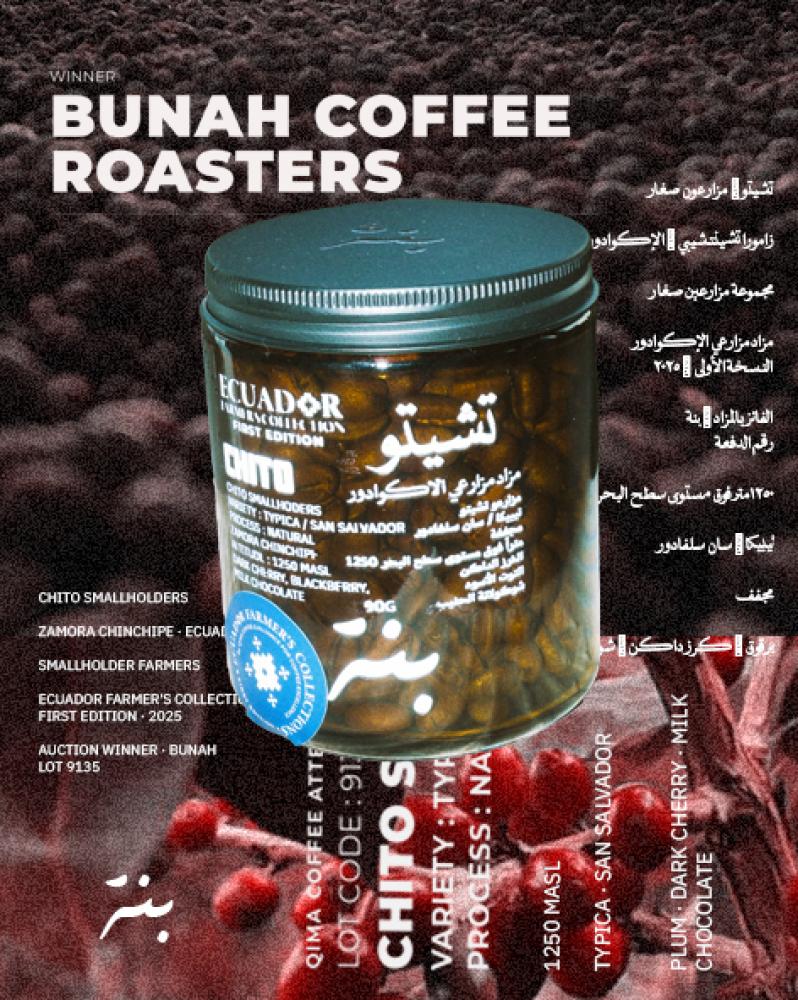
CHITO SMALLHODERS
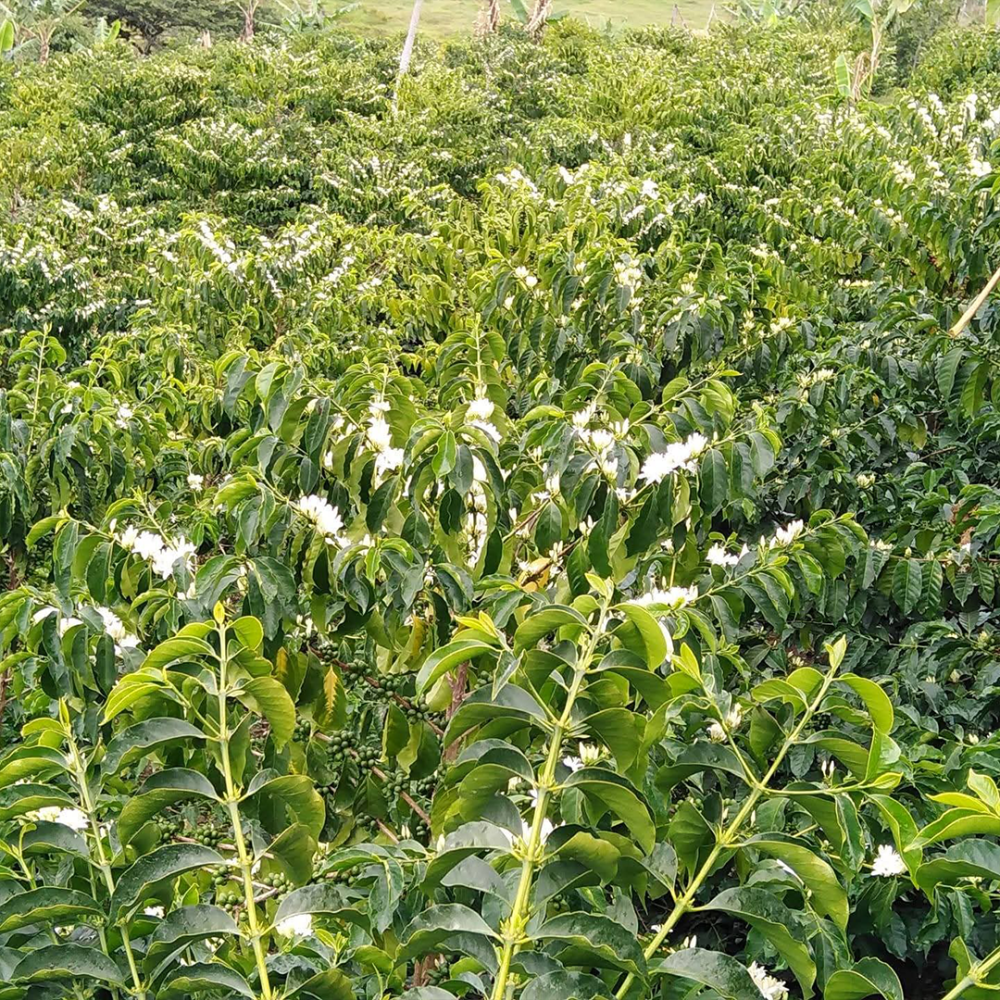
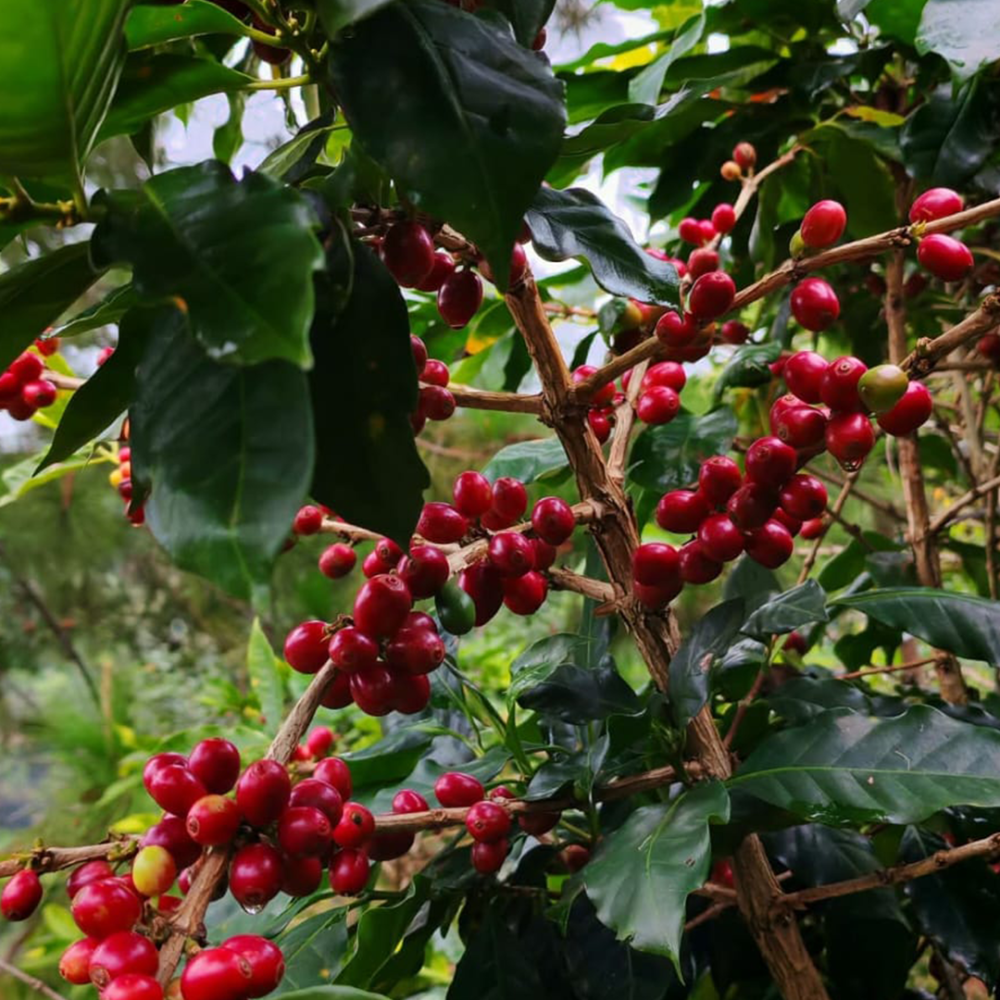
Chito is a rural parish in the canton of Chinchipe, Zamora Chinchipe, one
of six parroquias that make up a canton where coffee, cattle, and native
forest coexist across a landscape shaped by the Mayo-Chinchipe river
system. The province of Zamora Chinchipe occupies the ecological bridge
between the Andes and the western edge of the Amazon basin, and
Chito specifically sits toward the lower end of the altitude range where
Arabica can be cultivated in Ecuador, 1,250 masl, the warmest and most
Amazonian-influenced growing environment in this competition.
Coffee reached southern Ecuador in the early 1800s, built on Typica and
traditional varieties grown by indigenous and mestizo communities. In
Chito, native families still farm small plots,often under a hectare, where
coffee is part of a diversified system rather than a monocrop. Recently,
the Bracamoros Coffee Fair in nearby Zumba has created new access to
specialty markets that were historically unavailable to the region.
At 1,250 masl, the lower altitude produces a warmer, more humid
growing environment than the highland farms of Loja or upper Zamora
Chinchipe. Natural processing is well suited to these conditions: warmer
temperatures support consistent drying, and the Amazonian biodiversity
of the surrounding landscape contributes to a fermentation environment
that shapes the cup in ways that highland terroirs simply cannot. This
Typica / San Salvador Natural, lavender, yellow peach, guava, honey,
carries the warmth and fullness of a lowland Zamora origin.
Variety : Typica / San Salvador
Process : Natural
Municipality : Chito
Region : Zamora Chinchipe
Altitude : 1250 MASL
Cupping Notes:
Plum, Dark Cherry, Tangerine, Dark Cherry, Blackberry, Milk Chocolate,
Herbal, Red Wine.
Variety: Typica / San Salvador
A blend that combines Typica’s classic structure and clarity with the
rounder sweetness and body often associated with San Salvador
(a Bourbon-derived line). In Ecuador, this pairing can produce balanced,
versatile profiles that appeal across a wide range of roasting styles.
QIMA COFFEE X ECUADOR FARMER’S COLLECTION | PAGE 1 OF 3Ecuador
Ecuador is defined by contrast.
Coffee grows across Andean highlands, cloud forests, volcanic terrain,
and landscapes that lean toward the Amazon, often within a relatively
compact geography. Altitude, rainfall, humidity, and temperature can
shift quickly from one area to the next, and that variation gives Ecuador
an unusual range in the cup. It is an origin where coffees can move from
floral and lifted to dense, sweet, and fruit-driven, while still holding clarity
and structure.
The Ecuador Farmer’s Collection brings that regional diversity into focus
through Loja, Pichincha, Zamora Chinchipe, and Imbabura. Loja is widely
regarded as the centre of Ecuador’s specialty coffee landscape. In the
south of the country, its combination of altitude, dry conditions, and
established coffee culture has helped shape a profile often associated
with balance, sweetness, and composure in the cup.
Zamora Chinchipe offers a different expression. Closer to the Amazon
and defined by greener, more humid conditions, it has become one
of the most dynamic coffee areas in the country, producing coffees
with ripeness, intensity, and a strong sense of flavour movement. It is
also a region where experimentation in post-harvest work has become
especially important.
Pichincha, shaped in part by volcanic terrain and highland conditions,
brings another register altogether. Coffees from here can show
brightness, precision, and a more linear kind of clarity, with acidity that
feels clean rather than aggressive.
Imbabura adds yet another dimension. In the north, its higher elevations
and cooler conditions can produce coffees with refinement, aromatic lift,
and a more delicate structure.
Across these regions, Ecuador’s coffee is built largely by smallholder
farmers working on small, family-run plots. That scale is important. Variety
selection, cherry picking, fermentation, and drying are often managed
close to the farm itself, meaning decisions made at origin remain highly
visible in the final cup.
This is also a country with remarkable variety potential. Sidra, Typica
Mejorado, Geisha, and Sudan Rume have all found a natural place here,
alongside other cultivars that continue to shape Ecuador’s coffee identity.
Together, they help produce coffees that feel distinctive not only for their
flavour, but for the precision and regional character behind them.
QIMA COFFEE X ECUADOR FARMER’S COLLECTION | PAGE 2 OF 3Qima in Ecuador
Qima has been working in Ecuador since 2021, with a long-term focus
on building quality from the ground up.
The work began with field research and feasibility studies alongside
national partners, looking closely at how coffee moved through
smallholder systems and where the main constraints sat. From there,
the focus turned practical: how cherries are purchased, how lots are
separated, how fermentation is managed, how drying is controlled, and
how traceability can be protected through each stage.
Early pilots tested fresh cherry purchasing and Qima-managed
processing, helping identify post-harvest bottlenecks and gaps in lot
integrity. As that work developed, Qima expanded its exploration across
producing regions and associations, then concentrated efforts where
specialty traction appeared strongest, particularly in the south of the
country.
This led to a more anchored operating model in Zamora Chinchipe,
including direct cherry sourcing, close producer partnerships,
controlled processing trials, and a clearer understanding of what
performs best under Ecuadorian conditions. By 2025, that work had
matured into a full commercial processing season, with the first
Ecuador volumes released and protocols further refined through
market feedback.
What matters is that this has never been approached as a one-off
buying exercise. The aim has been to build a repeatable system inside
smallholder production: one that improves quality, strengthens
traceability, and gives producers a clearer route to market. The Ecuador
Farmer’s Collection came out of that longer process. It is not separate
from the work on the ground, but an expression of it.
QIMA COFFEE X ECUADOR FARMER’S COLLECTION | PAGE 2 OF 3Flavour in Ecuador
Ecuador’s flavour profile is defined by fruit, florality, and clarity.
Across the auction cuppings, nearly 3,500 flavour notes were recorded,
with close to half falling into fruit. Citrus, berries, and stone fruit appear
most frequently, orange, lime, grape, apple, peach, and plum, often
supported by a clean, structured acidity and a precise overall profile.
Floral character stands out as a defining feature. Notes like jasmine,
orange blossom, rose, and white florals are not just present, but
consistent, and strongly linked to quality.
The highest-scoring coffees showed a high concentration of floral
descriptors, pointing to clarity and aromatic lift as key markers of top-
performing lots.
Beyond fruit and florals, the profile broadens into sweetness and
structure: brown sugar, honey, caramel, and soft chocolate, alongside
tea-like qualities and light spice. Processing plays a role here, with
washed coffees leaning toward elegance and definition, and more
experimental methods bringing fuller fruit and density.
What emerges is not a single flavour identity, but a spectrum, anchored
in fruit and florals, and shaped by variety, altitude, and processing.
Ecuador’s coffees tend to feel precise, expressive, and layered, with a
balance that comes from clarity rather than weight.
QIMA COFFEE X ECUADOR FARMER’S COLLECTION | PAGE 3 OF 3